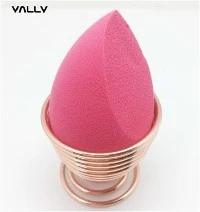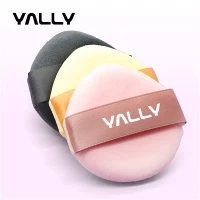

If you’ve ever squeezed a damp beauty sponge between your fingers, you know the feeling—soft, squishy, and oddly satisfying, until you think about what happens to it when you toss it in the bin after a week. As a supplier specializing in single color beauty sponges, I get asked this question all the time: are single color beauty sponges actually eco-friendly? The short answer isn’t a yes or no; it depends on what they’re made of, how they’re produced, and how long they last. Let’s break this down, because choosing a beauty sponge that works for your makeup AND the planet shouldn’t feel like a compromise.
First, let’s talk about what most beauty sponges are made of. For years, standard beauty blenders were made of latex, a natural rubber that’s derived from rubber trees—but it still has its own environmental and allergy-related drawbacks. Latex production requires large amounts of water and energy, and some people have serious allergic reactions to it, which pushed brands to look for alternatives. That’s where polyurethane (PU) foam comes in, the material most modern beauty sponges use now. But not all PU foam is created equal. Some are made with non-biodegradable chemicals that take hundreds of years to break down in landfills, which is why many people assume all beauty sponges are bad for the planet.
As someone who’s spent years refining single color beauty sponges, I’ve seen firsthand how the choice of material makes all the difference. When we developed our line, we wanted to avoid the pitfalls of both old latex and harsh PU foams. That’s why our core product line uses a special type of open-cell PU foam that’s not only latex-free (so it works for sensitive skin) but also designed to be more durable than standard sponges. A sponge that lasts longer means less waste in the long run, right? I’ve had customers tell me that their old cheap sponges start to tear after 3 uses, or grow mold if they don’t dry properly, which means they go through 2 or 3 a month. Our Eco Friendly Makeup Blending Sponge is engineered to be resilient—we’ve tested it to hold up through weekly deep cleans for at least 3 months, which cuts down on how many you need to buy and throw away every year.
Wait, but durability only goes so far if the foam isn’t recyclable or biodegradable. That’s a common misconception about single color beauty sponges—people think all foams are non-biodegradable, but that’s not true. Some PU foams are formulated with plant-based ingredients, like coconut oil or sugarcane, that break down much faster than traditional petroleum-based foam. Our team worked with chemists to create a blend that’s plant-infused, so when it does reach the end of its life, it breaks down in a commercial compost facility in about 18 to 24 months, compared to standard PU sponges that take 500+ years. We made sure to label this clearly, because we know it’s a big selling point for customers who care about their carbon footprint.
Of course, no product is perfect, and single color beauty sponges have their own unique environmental hurdles. One thing we’ve had to address is color pigment. Unlike multi-color marbled sponges, which use layered dyes that might not bond as strongly, single color sponges have a more uniform pigment throughout the foam. But here’s the catch: some cheap suppliers use lead-based or non-water-soluble pigments that can leach into the environment when the sponge breaks down. For our Beauty Pro Blending Sponge, we use only water-based, non-toxic pigments that are fully compatible with our plant-infused foam. That means when the sponge composts, the pigments break down too, without leaving harmful residues in the soil. It’s an extra step in the production process, but we think it’s worth it to avoid harming the planet.
Another point that often gets overlooked is packaging. As a supplier, we know that packaging waste is just as big a problem as the product itself. That’s why our Flawless Finish Makeup Sponge, the newest addition to our single color line, comes in 100% recyclable cardboard packaging with no plastic wrappers or tags. A lot of beauty brands still wrap their sponges in individual plastic bags, which add unnecessary waste. We made the switch to minimal, recyclable packaging two years ago, and it’s been a big hit with our eco-conscious clients—especially makeup artists who use dozens of sponges a day and don’t want to deal with piles of plastic trash.
But let’s be real: even the most eco-friendly single color beauty sponge won’t make a difference if people aren’t using it properly. The biggest environmental issue with beauty sponges isn’t the product itself—it’s how people replace them too often. I’ve had friends who change their sponge every week “to keep it clean,” but over-washing or over-replacing is actually more wasteful. The rule of thumb is to replace your sponge every 30 to 90 days, depending on how often you use it and how well you clean it. A good deep clean once a week with mild soap and warm water will keep your sponge usable longer, so you don’t have to toss it prematurely. That’s why our team includes a simple care guide with every order, because we want our customers to get the most out of their sponge before they need a new one.
Now, if you’re a brand looking to add eco-friendly single color beauty sponges to your line, or a makeup artist who wants to switch to more sustainable tools, you might be wondering what options are out there. We’ve also expanded our line to include the Fruit Series Of New Makeup Sponges, which come in subtle, fruit-inspired tones (think soft mango, lavender, and pineapple) with the same plant-based foam and recyclable packaging. These are perfect for brands that want something on-trend without sacrificing sustainability. And if you need custom sizes, shapes, or colors, our Makeup Sponge OEM Manufacturer team can work with you to create a sponge that fits your brand’s needs and your eco goals.


I know a lot of people are still skeptical about beauty sponges being truly eco-friendly. It’s easy to feel overwhelmed by all the greenwashing out there—brands claiming their product is “sustainable” just because it’s made with a tiny bit of recycled material, but not the whole product. For us, sustainability isn’t a marketing buzzword—it’s built into every part of the sponge, from the foam formula to the packaging to how we source our materials. We work with suppliers who use renewable energy in their factories, and we’ve cut our water usage by 30% in the production process compared to standard sponge makers.
At the end of the day, single color beauty sponges can be eco-friendly, but only if you choose the right ones. Look for sponges made with plant-infused PU foam, non-toxic pigments, and minimal, recyclable packaging. Avoid cheap sponges that tear easily or use harmful chemicals, because those are the ones that will end up in landfills and hurt the environment.
If you’re ready to make the switch to more sustainable single color beauty sponges, we’d love to chat. Whether you’re a small makeup brand looking for custom sponges, a salon owner stocking up for your artists, or someone just wanting to make a better choice for the planet, we can help you find the perfect sponge that works for your needs and your values.
References:
- Environmental Protection Agency. (2022). "Plastic and Product Waste in the Beauty Industry."
- Journal of Sustainable Chemistry. (2021). "Biodegradable Polyurethane Foams for Personal Care Applications."
- Skin Allergy Research Journal. (2020). "Latex vs. Synthetic Beauty Sponge Allergen Profiles."
- Packaging Waste Reduction Alliance. (2023). "Minimal Packaging Solutions for Consumer Goods."