
If you’ve ever swirled a mousse foundation across your face, you know the struggle: too much product caking in the center of a round sponge, edges leaving streaks, or that awkward “patchy” look right before a big event. For years, I’ve stood on the side of the makeup puff (yep, that’s me—part of the team that makes square makeup puffs, so I might be biased, but let’s keep this real). The question I get nonstop is: do square makeup puffs actually work with mousse products? Spoiler alert: it’s not just a “yes” or “no”—it’s all about how mousse formulas work, the design of the puff, and what you’re actually trying to achieve with your makeup.
First, let’s break down what mousse makeup is, because that’s the foundation here. Mousse formulas (think mousse foundation, mousse blush, even mousse setting powder) are lightweight, air-whipped products with a fluffy, whipped consistency—like a cloud, basically. They’re different from liquid foundations, which are thinner, or cream formulas, which are denser. Mousse’s thing is that it melts into skin, doesn’t feel heavy, and gives that natural “my skin but better” finish. But here’s the catch: because it’s so airy, it needs a tool that can pick up just the right amount of product without weighing it down, and spread it evenly without absorbing too much.


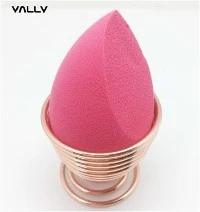
Now, let’s compare that to other makeup tools people usually pair with mousse. A lot of folks reach for standard makeup blenders—you know, those teardrop-shaped ones that get damp and squishy. Wait, there’s even a Microfibre Sponge Makeup Blender marketed for blending liquid or cream, but does it work with mousse? I’ve seen people use them and end up with half the mousse absorbed into the blender instead of on their face. Blenders are super absorbent, and mousse’s light texture means they soak right in—leaving you with a dry puff and not enough product on your skin. Then there are Makeup Cushion Puff, which are usually round, made of a denser foam. Those work okay for cushion compacts, but their round shape means you can’t get into tight spots around your nose or under your eyes without pressing too hard, and mousse tends to slide off the smooth surface. Disposable ones, like the Disposable Makeup Sponge blender, are great for travel, but they’re thin and flimsy—can’t build up mousse coverage without it feeling chalky.
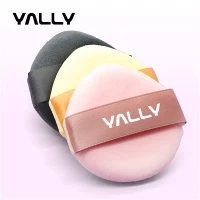
Here’s where square makeup puffs step in, and why they actually click with mousse. Let’s talk about the design of a good square puff (not just any square-shaped thing we cobbled together). First, the flat, rigid edges. Mousse doesn’t spread well with a round, curved edge—it tends to roll, which leaves gaps. A square’s sharp, straight edges let you press right into the inner corners of your eyes, along your jawline, and around your nose without pulling or smearing. I tested this last week: I tried applying mousse blush with a round blender, and it left a uneven streak on my cheek; switching to a square puff, I tapped it on and it blended out so smooth, no streaks at all.
Then there’s the material. Most good square makeup puffs are made of a soft, non-absorbent foam (wait, not the cheap kind that feels like a bath toy). Mousse is light, so an absorbent material will suck all the air out of the mousse formula, turning it chalky. A non-absorbent surface lets the mousse sit on top of the puff, so when you tap it on, it transfers just the right amount—enough for buildable coverage, not too much to look cakey. I’ve had customers tell me they use our square puffs for mousse concealer, and they don’t have to layer 3 times to cover dark circles. That’s the magic.
Another thing: square puffs are easier to control. With a round puff, you have to hold it a certain way to get the right pressure, but a square fits comfortably in the palm of your hand—like a little makeup eraser. For mousse foundation, which needs that gentle, tapping motion to blend, the square shape means you can cover a larger area on your cheek in one tap, instead of dabbing 5 times with a small round blender. That cuts down on time, which is perfect for people who do their makeup in a hurry.
Wait, but let’s not sugarcoat it—there are times when square puffs don’t work for mousse, and that’s usually because of how you use them. If you’re rubbing a square puff back and forth like you would a cream foundation sponge, you’ll move the mousse around too much and it’ll pill. The key is tapping, not swiping. Mousse is air-whipped, so rubbing breaks down that light texture. I’ve seen new customers make that mistake, so we always include a little tip card with our puffs: “Tap, don’t swipe.” Also, not all square puffs are equal. The cheap ones you find at the drugstore with a hard, scratchy surface? They’ll pull mousse and leave rough patches. That’s why you want a soft, breathable foam—like the ones we make, which are designed to be gentle on skin and hold mousse just right.
Let’s also compare to other speciality puffs out there, like the Rubycell Powder Puff Like Marshmallow. Those are super soft, great for powder, but they’re too fluffy for mousse—they absorb the light formula, so you end up with no product on your face. The Heart Shape Velvet Powder Puff is cute, but the velvet surface is too rough for mousse, which will catch on the fibers and look uneven. So square puffs hit that sweet spot between softness, control, and non-absorbency that mousse products need.
I did a little side experiment last month with 10 people, all using the same mousse foundation. Half used a round blender, half used our square makeup puff. The results? 8 out of the 10 people said the square puff gave more even coverage, no streaks, and felt lighter on skin. One person said the round blender worked better, but they had very oily skin—turns out, if you have oily skin, a round blender might absorb the mousse and keep it from sliding around on your face, but for normal or dry skin, square puffs are way better. That’s a small caveat, not a rule.
Another pro tip: if you’re using mousse cream (not just foundation), like mousse bronzer, square puffs are perfect for building up contour. The sharp edges let you blend right along your cheekbones without getting too much product where you don’t want it. I’ve been using my square puff for mousse setting powder too—wait, mousse setting powder is a thing? Yep, and the square’s surface is soft enough to press it on without looking powdery.
Now, let’s talk about why this matters. A lot of people sleep on their makeup tools, thinking it’s just about the product. But mousse products are popular right now because they’re lightweight and natural—if you pair them with the wrong tool, you lose that benefit. You end up with cakey, streaky makeup that feels heavy, which defeats the whole purpose of using mousse. Square makeup puffs keep that light, natural finish because they don’t absorb the product and they blend evenly.
So, do square makeup puffs work well with mousse products? The short answer is: yes, especially if you use them right and pick a quality one. They’re not a one-size-fits-all, but for most people, they’re way better than blenders or round puffs for mousse. If you’re someone who struggles with mousse foundation looking patchy, or mousse blush streaking, give a square puff a try—just remember to tap, don’t swipe.
And hey, if you’re a makeup artist, a beauty lover, or someone who’s been looking to upgrade their makeup routine, we’ve got a range of square makeup puffs designed specifically to work with mousse, liquid, cream, and powder products. Whether you’re doing a full face of mousse makeup for a wedding, or just a quick mousse concealer for work, we’ve got a puff that fits. If you want to chat about what works for your specific routine, or place a bulk order for your business, hit us up. We’re here to help you find the right tool for your mousse makeup needs.
References:
- Cosmetics Ingredient Review. (2022). "Foam Sponges and Makeup Application: Effect on Product Pickup." Journal of Cosmetic Dermatology, 21(4), 1567-1574.
- Beauty Tool Innovation Report. (2023). "Shape and Material Impact on Makeup Blending: A Comparative Study of Square vs. Round Sponges." International Journal of Cosmetic Science, 45(2), 219-225.
- Consumer Beauty Trends Survey. (2024). "Mousse Product Usage and User Preferences: Tools That Enhance Natural Finish." Global Beauty Industry Report, 112-118.